
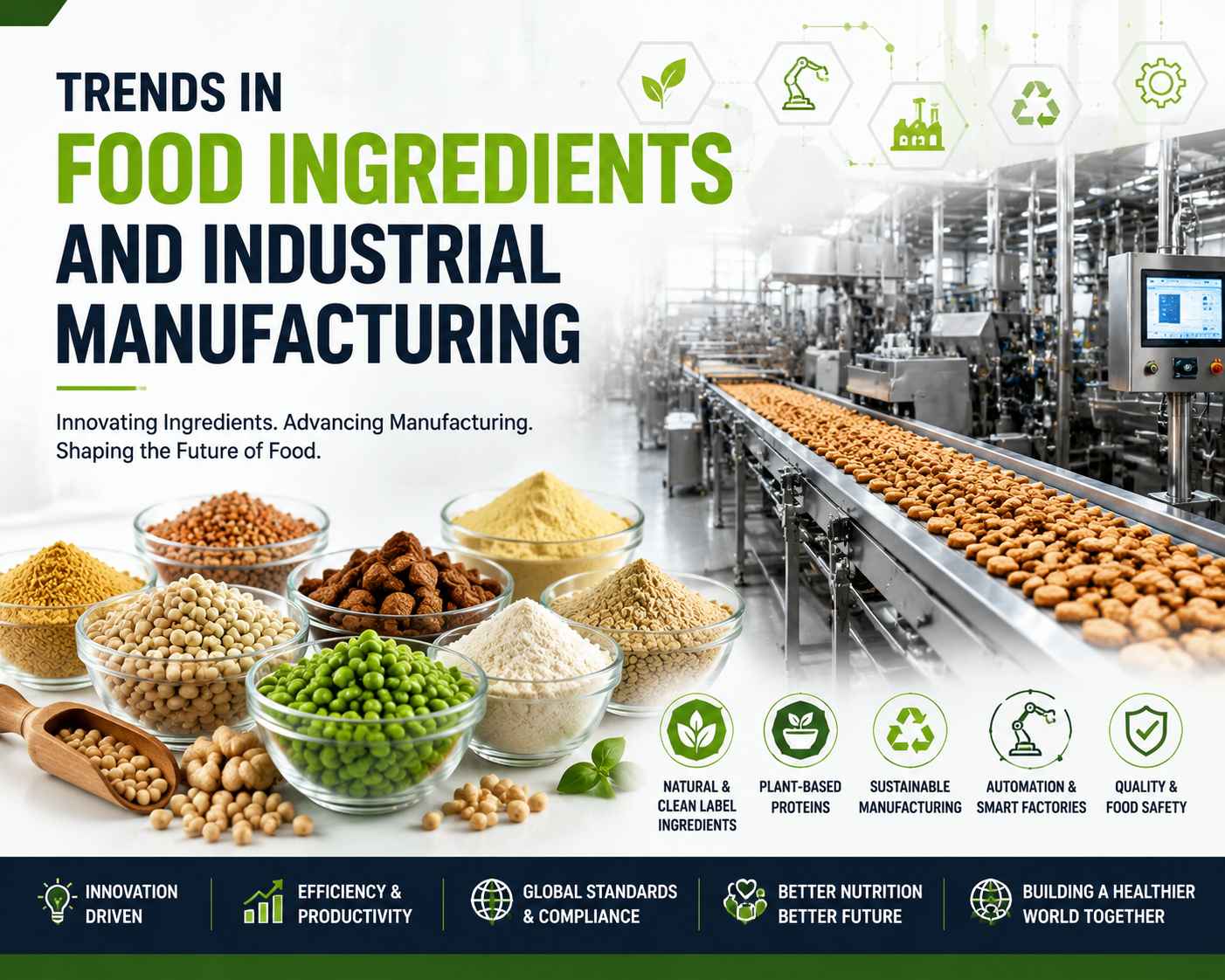
Trends in Food Ingredients and Industrial Manufacturing
The global food industry is undergoing a remarkable transformation, driven by technological advancements, changing consumer preferences, and increasing demand for sustainable production. At the same time, industrial manufacturing has embraced automation, digital technologies, and stricter quality standards to improve efficiency and product consistency.
Food ingredients and industrial manufacturing now work together to create safer, healthier, and higher-quality products for consumers worldwide. Manufacturers are investing in innovative ingredients, advanced processing techniques, and smart manufacturing systems to meet growing global demand while maintaining compliance with international regulations.
In this article, we explore the latest trends shaping food ingredients and industrial manufacturing and how these innovations are transforming the future of food production.
Growing Demand for Natural Food Ingredients
Consumers today prefer products made from clean-label and natural ingredients. They carefully read product labels and choose foods free from artificial preservatives, colors, and flavors.
Popular natural ingredients include:
- Organic Herbs & Spices
- Natural Sweeteners
- Plant-Based Proteins
- Fruit Extracts
- Vegetable Powders
- Functional Fibers
Natural ingredients improve product quality while supporting healthier lifestyles.
Rise of Plant-Based Food Production
Plant-based foods continue to dominate global food trends.
Manufacturers are increasingly using ingredients such as:
- Pea Protein
- Soy Protein
- Chickpea Flour
- Oat Fiber
- Rice Protein
- Lentil Protein
These ingredients help develop healthier alternatives for dairy, meat, bakery, and snack products.
Smart Industrial Manufacturing
Modern factories now use smart manufacturing technologies that improve productivity and reduce production costs.
Key innovations include:
- Artificial Intelligence (AI)
- Robotics
- Automated Packaging
- Smart Sensors
- Machine Learning
- Industrial IoT (Internet of Things)
These technologies improve efficiency while reducing human error.
Sustainable Manufacturing Practices
Sustainability has become one of the biggest priorities for manufacturers worldwide.
Leading companies now focus on:
- Energy-Efficient Equipment
- Water Conservation
- Eco-Friendly Packaging
- Waste Reduction
- Renewable Energy
- Carbon Footprint Reduction
Sustainable manufacturing benefits both businesses and the environment.
Food Safety and Quality Standards
Global buyers expect products that comply with international food safety regulations.
Manufacturers now follow strict standards such as:
- HACCP
- ISO Certifications
- GMP (Good Manufacturing Practices)
- FSSAI Compliance
- FDA Standards
- Export Quality Testing
Strong quality control builds trust and strengthens global business relationships.
Automation in Food Processing
Automation has significantly improved food manufacturing.
Benefits include:
- Faster Production
- Reduced Labor Costs
- Consistent Product Quality
- Better Hygiene
- Higher Productivity
- Improved Traceability
Automated production lines also reduce contamination risks.
Growing Demand for Functional Food Ingredients
Consumers increasingly seek foods that offer health benefits beyond basic nutrition.
Popular functional ingredients include:
- Probiotics
- Prebiotics
- Dietary Fiber
- Omega-3
- Vitamins
- Minerals
- Antioxidants
These ingredients support immunity, digestion, and overall wellness.
Digital Supply Chain Management
Modern manufacturers are adopting digital supply chain solutions to improve inventory management and logistics.
Advantages include:
- Real-Time Tracking
- Better Inventory Control
- Faster Deliveries
- Lower Operational Costs
- Improved Customer Satisfaction
Technology helps businesses respond quickly to changing market demands.
Private Label & OEM Manufacturing
Private label manufacturing is becoming increasingly popular worldwide.
Businesses prefer OEM manufacturers because they offer:
- Customized Products
- Brand Packaging
- Flexible Production
- Cost-Effective Solutions
- Global Export Support
- High Manufacturing Standards
This allows companies to launch products quickly without investing in production facilities.
Future of Food Ingredients and Industrial Manufacturing
The future of the industry will be driven by innovation, automation, and sustainability.
Emerging trends include:
- AI-Based Manufacturing
- Smart Food Factories
- Sustainable Packaging
- Plant-Based Nutrition
- Personalized Nutrition
- Clean Label Products
- Digital Quality Control
- Advanced Food Processing Technologies
Companies adopting these technologies will remain competitive in global markets.
Benefits for Businesses
Businesses embracing modern food ingredients and manufacturing technologies gain several advantages:
- Better Product Quality
- Increased Production Efficiency
- Reduced Manufacturing Costs
- Stronger Brand Reputation
- Higher Customer Satisfaction
- Global Export Opportunities
- Compliance with International Standards
Conclusion
Food ingredients and industrial manufacturing are evolving together to create safer, healthier, and more sustainable products. As technology continues to advance, manufacturers are adopting automation, clean-label ingredients, and environmentally friendly production methods to meet growing consumer expectations.
Companies that invest in innovation, quality control, and sustainable manufacturing will be well-positioned to succeed in the competitive global marketplace. The future belongs to businesses that embrace change while delivering high-quality products that meet international standards.